QR codes, NFC tags and short links are three ways to get someone from the physical world — a poster, a product, a spoken ad — to a digital destination. They're often treated as rivals, but they're really specialists: each one clearly wins in some situations and clearly loses in others. This guide compares them on the things that actually decide it, and gives you a simple rule for picking the right one the first time.
What each one actually is
A QR code is a printed visual pattern; you point a phone camera at it and it opens a link. An NFC tag is a tiny wireless chip embedded in a sticker, card or product; you tap a phone against it and it opens a link — no camera, no app, just proximity. A short link is simply a tidy web address (like ex.co/menu) that a person reads and types, clicks, or hears.
The key difference: QR and NFC are ways to attach a link to a physical object, while a short link is a way to make a link easy to share, say, or type anywhere. That distinction drives almost every decision below.
Cost and setup
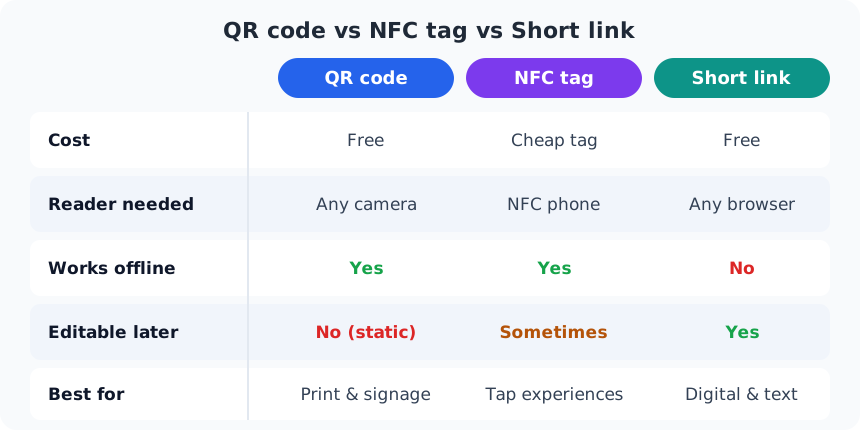
A QR code is free — generate it and print it. A short link is free too, from any URL shortener or your own site. NFC costs money: you buy the physical tags (cheap individually, but a real per-unit cost at scale) and encode each one. So for anything printed in volume, QR and short links start with a clear cost advantage; NFC only earns its keep when the tap experience is worth the hardware.
Device support and friction
QR codes work on essentially any phone with a camera — universal reach, at the cost of a few seconds of aiming. NFC is faster and feels magic (just tap), but only works on phones with NFC enabled, and the tap target has to be found and touched, which isn't obvious to everyone. Short links have the widest reach of all — anything with a browser — but in the physical world they carry the most friction, because someone has to read and correctly type the address.
There's an offline angle too: a printed QR code or an NFC tag carries its link with it, so it keeps working with no network to reach the code itself. A short link only exists once someone gets it into a browser — if they can't click it, they must type it by hand.
Editability and analytics
A plain static QR code is fixed: the link is baked in, so changing the destination means reprinting. NFC tags can sometimes be re-encoded, and short links can usually be re-pointed from a dashboard. All three can gain redirection and scan/click analytics if you route them through a service — but that adds a third party and, often, a fee, and it means your audience is trusting a domain you may not control. Our guide to static vs. dynamic codes unpacks that trade-off, and you can also track scans for free without a paid dynamic service.
When to use each
Reach for a QR code for print and signage — menus, posters, packaging, flyers, business cards. It's free, universal, and needs no special hardware on either side. For the vast majority of “connect this physical thing to a web page” jobs, QR is the default answer.
Reach for NFC when the tap itself is the point — a premium product tag, a smart poster, a museum exhibit, a review or loyalty stand where you control the surface and your audience carries modern phones. NFC feels effortless and high-end; it's worth the cost when experience matters more than universal reach.
Reach for a short link in digital and spoken contexts — a radio or podcast ad, a slide, a social post, a text message — anywhere people click rather than scan, or need to remember and type an address. A short link is also the perfect destination that a QR code or NFC tag points to.
You don't have to choose just one
The best campaigns layer them. Put a clean short link on a poster and a QR code beside it, so people can scan or type; the QR points at the same short link. Ship a product with an NFC tag for the tap crowd and a printed QR for everyone else. They're not competitors so much as different doors into the same room — and the more doors you offer, the more people get in. When in doubt, start with a free QR code from QRStudio and add the others only where they clearly pull their weight.
A quick decision guide
If you're still unsure, answer three questions. First: is it going on a physical thing, or into a digital or spoken context? Physical points you to QR or NFC; digital or spoken points you to a short link. Second: does your whole audience need to reach it, on any phone, for free? That's QR — universal and zero-cost. Third: is the tap itself part of a premium experience, and can you afford the tags and control the surface? That's where NFC earns its place.
For most small businesses and creators, the honest answer lands on a free QR code pointing at a clean short link — universal reach, no hardware, no fee — with NFC reserved for the occasional standout piece. Start simple, measure what happens, and add complexity only when the results ask for it.